
Inventory Adjustment Done – Lead Times Shorten to Normal Levels
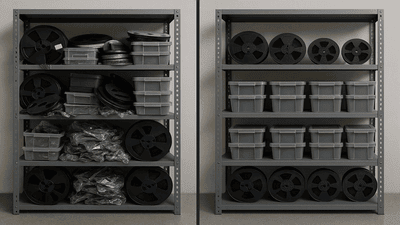
The semiconductor industry has finally exited a long and painful inventory adjustment phase. After years of oscillating between shortages and surplus, channel inventories and supplier stock levels have normalized, and lead times for many critical components are returning to what manufacturers recognize as “normal” ranges.
This article explains how the inventory adjustment unfolded, why lead times are shortening, what “normal” now really means, and how different stakeholders—from operations and procurement to finance and engineering—should respond to this new phase of the semiconductor cycle.
From whiplash to normalization: how we got here
To understand why lead times are returning to normal, it helps to look back at the past several years of volatility. Initially, pandemic‑era shocks created severe disruptions in both demand and supply. Lockdowns, logistics bottlenecks, and surging orders for PCs, servers, and networking hardware pushed semiconductor capacity to its limits. Many OEMs responded by over‑ordering and building safety stock, fearful of line‑downs and missed product launches.
As conditions evolved, those defensive strategies produced excess inventory in many product categories—especially in mature‑node microcontrollers, analog components, and some consumer‑facing devices. At the same time, certain high‑value segments such as advanced CPUs, GPUs, and high‑bandwidth memory remained tight. The result was a patchwork market with simultaneous scarcity and surplus, making planning difficult.
Over the past several quarters, distributors, EMS firms, and OEMs have worked through surplus stock. Write‑downs and slow purchases gradually aligned inventory with realistic demand. Foundries and IDMs also rationalized capacity and product mix, trimming output in oversupplied categories and focusing on higher‑margin technologies. That combination of demand absorption and supply discipline finally brought the system back into balance.
What it means when “inventory adjustment is done”
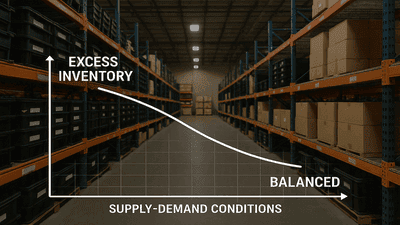
When companies say the inventory adjustment is “done,” they generally mean three things:
First, channel inventory levels have returned to target ranges. Distributors are no longer holding months of excess stock in slow‑moving categories, and OEMs have reduced emergency buffers that tied up working capital without adding much resilience.
Second, order patterns have stabilized. The wild swings in bookings—huge spikes followed by abrupt cancellations—have mellowed into more predictable ordering behavior. Demand forecasts are now based more on genuine pull from end markets than on fear‑driven stockpiling.
Third, production plans and utilization rates have become more consistent. Fabs and assembly plants are running at levels that match medium‑term expectations rather than crisis peaks or troughs. This steadier operational environment makes it easier to quote and maintain realistic lead times.
In short, the industry has moved from a corrective posture—trying to repair the consequences of earlier over‑ or under‑ordering—back to a more forward‑looking stance where planning horizons extend beyond the next emergency.
Lead times return to “normal” – but normal has evolved
Lead times—the period between placing an order and receiving parts—serve as a practical barometer of supply‑demand balance. During the height of recent volatility, many product categories saw lead times blow out to uncomfortable levels: 26 weeks for common microcontrollers, 40 weeks or more for certain power devices and FPGAs, and unpredictable allocation for specialized components.
As inventory has normalized, lead times have shortened. For mainstream, mature‑node devices, the market has largely returned to more familiar ranges—often in the 8–12 week band for commodity parts and somewhat longer for complex, customized devices. In some oversupplied categories, lead times may even fall below historical norms as suppliers try to attract orders.
However, “normal” today is not identical to the pre‑pandemic baseline. Several structural changes mean that what customers experience as normal has shifted:
- Highly specialized, cutting‑edge components such as advanced AI accelerators, leading‑edge CPUs and GPUs, and HBM‑class memory still command longer and more variable lead times, reflecting their constrained capacity and complex packaging requirements.
- Automotive‑grade and industrial‑grade components may maintain slightly longer lead times due to strict qualification, test, and reliability requirements, even though they are no longer in crisis mode.
- Certain packaging and substrate services remain tighter than front‑end wafer production, creating pockets where back‑end lead times are the limiting factor.
Thus, while the worst of the lead‑time inflation has passed, planning must still account for differentiated “normality” across product lines and technologies.
Operational benefits of shorter lead times
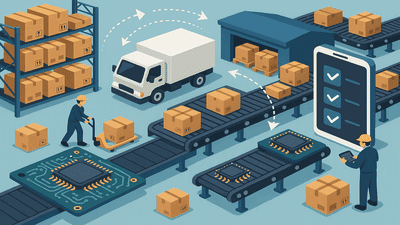
Shorter, more predictable lead times bring concrete operational benefits to manufacturers and their partners.
Improved production flexibility. When components arrive within predictable windows, plants can adjust schedules with less risk. Late‑stage design tweaks, demand surges for specific models, or reslotting of production campaigns become easier to accommodate.
Reduced safety stock requirements. Excess inventory used as insurance against long lead times can be trimmed. Companies can lower working‑capital usage, reduce warehouse space needs, and cut obsolescence risk without sacrificing continuity of supply.
Better coordination across tiers. EMS providers, OEMs, and tier‑one suppliers gain more confidence that commitments will be met. This improves collaboration on new product introductions (NPIs), ramp profiles, and end‑of‑life transitions.
Higher forecast accuracy. With fewer emergency orders and corrections, demand signals improve. Suppliers receive cleaner forecasts, which reinforce the virtuous cycle of stable lead times and production planning.
Procurement strategy in a post‑adjustment world
Procurement teams must shift from crisis‑mode tactics to a more disciplined, segmented approach now that inventory adjustment is complete and lead times are normalizing.
Rebuild policies around differentiated criticality. Not all components deserve the same treatment. Mission‑critical, single‑source, long‑lead items may still warrant modest buffers and multi‑year agreements, while broadly available commodity parts can be managed more leanly.
Move away from blanket over‑ordering. The experience of tying up capital in surplus inventory and suffering write‑downs should be fresh. Procurement should resist returning to panic buying, instead focusing on collaborative forecasts and structured capacity reservations where necessary.
Renegotiate contracts for stability, not just price. With lead times shortening, some buyers may be tempted to focus solely on cost. A more strategic view emphasizes stable supply arrangements, service levels, and joint planning clauses that prevent future cycles from becoming destabilizing.
Leverage vendor performance data. The adjustment phase revealed which suppliers communicated clearly, honored commitments, and helped navigate shortages. Those performance records should inform preferred‑supplier lists and long‑term partnership choices.
Finance and working capital: turning normalization into advantage

From a finance perspective, inventory normalization and shorter lead times create opportunities to improve balance‑sheet health and capital efficiency.
Lower inventory days. Companies can gradually reduce days of inventory for non‑critical categories, freeing cash for R&D, capex, or debt reduction. Careful modeling is needed to ensure that cuts do not reintroduce risk, but the direction is clear.
More predictable cash flows. Consistent lead times help align procurement and production with sales cycles, smoothing cash inflows and outflows. This makes budgeting and capital‑allocation decisions more reliable.
Better margin visibility. Stable supply chains reduce the frequency of expedited shipping, last‑minute redesigns, and emergency sourcing at inflated costs. Over time, this supports more consistent gross margin performance.
Strategic investment choices. With less capital locked in safety stock, companies can revisit deferred investments in automation, engineering tools, or new product lines that were paused during the adjustment phase.
Engineering and product management: new room to maneuver
Shorter lead times and a completed inventory adjustment phase also change the constraints that engineers and product managers face.
Increased design freedom. During shortage periods, designs were often constrained by what chips were available rather than what was optimal. As supply stabilizes, teams regain the ability to select components based more on performance, power, and cost than on immediate availability.
More reliable NPI schedules. Launch timelines can be planned with higher confidence when key parts have predictable lead times. This reduces the risk that missing semiconductors delay product introductions or force last‑minute redesigns.
Broader qualification strategies. Engineering teams can re‑engage in qualifying second sources and alternative parts under less time pressure. This strengthens future resilience without having to do rushed, high‑risk substitutions.
Focus on long‑term architectures. Instead of continually tweaking designs to cope with temporary shortages, teams can invest in platform architectures that will remain viable across multiple cycles and supply conditions.
Why “normal” does not mean complacent
Even though inventory adjustment is done and lead times have shortened, complacency would be dangerous. Semiconductor markets remain cyclical, and structural changes continue to unfold.
Demand patterns are still evolving. AI workloads, automotive electrification, industrial digitization, and edge computing are reshaping which components will be tight or loose over time. Today’s normal lead times could lengthen rapidly for specific technologies if demand spikes or capacity lags.
Geopolitics and regulation matter. Export controls, regional subsidies, and trade tensions can suddenly change supply dynamics for certain chips, especially those at advanced nodes or involving sensitive IP. Resilient strategies must account for these external risks.
Packaging and materials bottlenecks may persist. While wafer capacity and generic components have normalized, some advanced packaging and critical materials remain potential bottlenecks. Long‑term plans should reflect where back‑end capacity is still relatively tight.
Future cycles will come. Inventory and lead‑time normalization does not eliminate the semiconductor cycle; it simply closes one chapter. The next upcycle or downturn will arrive, and companies can use current calm to prepare structurally rather than react tactically.
Practical checklist for the post‑adjustment phase
To turn this new environment into a competitive advantage, stakeholders can follow a practical checklist:
For procurement and supply‑chain leaders:
- Reclassify components by criticality and adjust safety stock policies accordingly.
- Replace emergency ordering behavior with structured, collaborative forecasting.
- Strengthen preferred‑supplier relationships and formalize joint planning routines.
For operations managers:
- Use shorter lead times to refine production scheduling and reduce changeover risk.
- Align capacity plans with realistic, mid‑term demand scenarios rather than worst‑case assumptions.
- Invest in process improvements that enhance flexibility and responsiveness.
For finance teams:
- Gradually reduce inventory days in non‑critical categories while monitoring service levels.
- Reinvest freed working capital into strategic initiatives rather than allowing it to dissipate.
- Update risk models to reflect lower immediate supply volatility but ongoing macro and geopolitical risks.
For engineers and product managers:
- Revisit designs that were constrained by shortage conditions and optimize components where feasible.
- Expand second‑source qualification and modular BOM strategies for future resilience.
- Plan roadmaps that anticipate differentiated lead times across advanced and mature technologies.
Conclusion: a new baseline, not a return to the past
The completion of the semiconductor inventory adjustment and the return of lead times to more normal levels mark a crucial inflection point. The industry has moved out of triage mode and into a phase where thoughtful planning, segmented strategies, and long‑term partnerships can flourish. Yet this is not simply a return to the pre‑pandemic status quo. Demand structures, technology roadmaps, geopolitical contexts, and supply‑chain architectures have all evolved.
Companies that recognize this and treat the current calm as a chance to rebuild smarter—not just relax—will be better positioned for the next cycle. By using normalized lead times to strengthen forecasting, refine inventory policies, deepen supplier collaboration, and regain design flexibility, they can convert a hard‑won equilibrium into durable competitive advantage.